

Installation
Heat Pump Installation in Pleasanton & the Tri-Valley
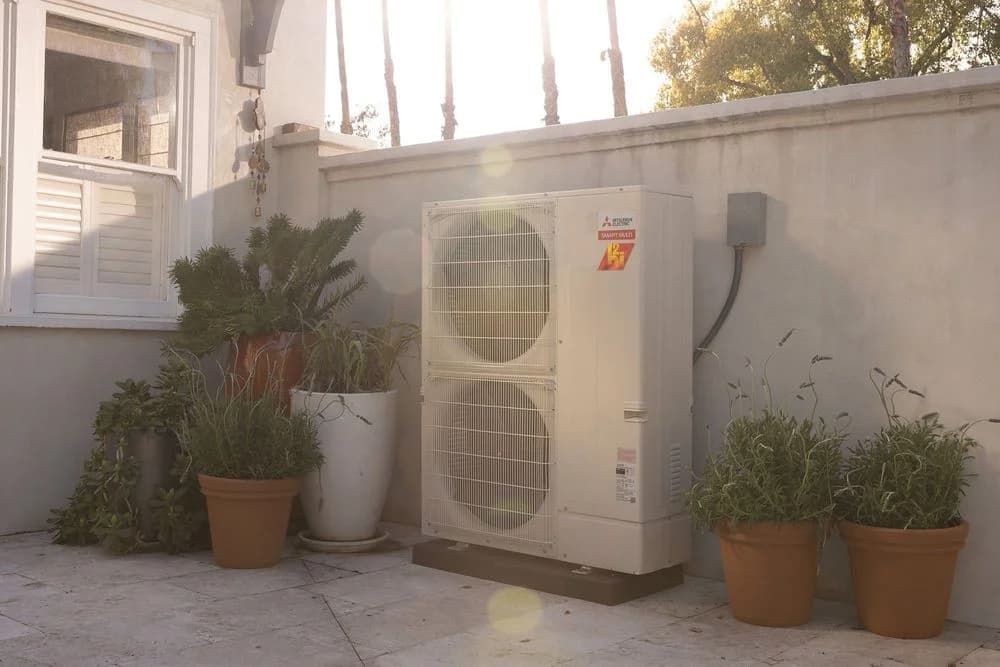
Heat pump installation replaces or supplements your existing heating and cooling with a single electric system that does both. We assess your home’s size, insulation and ductwork, recommend properly sized equipment, and install and commission the system so it delivers quiet, efficient comfort in every season.
Sound familiar?
Signs it may be time for a heat pump
- Your furnace or AC is nearing the end of its service life and you’d rather invest in one system than two.
- Summer cooling bills keep climbing while some rooms never feel right.
- You want to move away from gas heating toward an all-electric home.
- You’re planning a remodel or addition and need heating and cooling designed in.
- You want air conditioning in a home that has never had it — a heat pump adds cooling and upgrades heating at the same time.
Benefits
Why homeowners choose a heat pump
- One system, both seasons
- A heat pump heats in winter and cools in summer, providing both functions through one matched system.
- Efficient electric operation
- Instead of generating heat, a heat pump moves it — which is why modern units can deliver more heat energy than the electricity they consume.
- Even, quiet comfort
- Variable-speed heat pumps run longer at lower output, which evens out room-to-room temperature swings and keeps operation quiet.
- Incentive eligibility
- Some projects may qualify for currently available incentive programs. Check address, equipment, contractor and application requirements before counting a rebate in your budget.
What to expect
How installation works
In-home assessment
We look at your home’s layout, insulation, ductwork and electrical panel, and talk through how you actually use each space.
System recommendation and scope
You get a written recommendation with equipment options and a clear project scope — what’s included, what’s not, and what happens on installation day.
Installation and commissioning
Our installers set the equipment, make refrigerant, electrical and condensate connections, then commission the system: verifying charge, airflow and controls before we walk you through it.
Systems
System types we install
- Ducted central heat pumps
- Use your existing (or upgraded) ductwork to heat and cool the whole home from one air handler — the most common furnace-and-AC replacement.
- Ductless mini-split systems
- Wall- or ceiling-mounted indoor heads serve individual rooms without ducts — ideal for additions, ADUs and homes without usable ductwork.
- Variable-speed options
- Inverter equipment adjusts compressor output within a model-specific range. Compare its minimum capacity, airflow and controls as well as peak output.
Choose equipment around heating and cooling loads
A heat pump serves two seasons, so selection should address both heating and cooling requirements. Review the model’s capacity at the design conditions used for your home and the role of any supplementary heat. Inverter operation can vary output, but it does not remove the need for appropriate sizing.
Agree on distribution at the same time: suitable central ducts, individual ductless rooms, or a combination with clearly defined coverage. Ask how bedrooms with closed doors and spaces with different schedules will be served. Existing comfort problems should appear in the design discussion, not be left to thermostat adjustments after installation.
Separate equipment selection from site work
A recommendation should connect your comfort goals to a load calculation and a complete installation scope. Review the indoor/outdoor match, any supplementary heat, electrical requirements, duct airflow, outdoor location and condensate route together. Panel upgrades and duct replacement are decisions based on assessment, not automatic requirements.
Make your first conversation useful
Share equipment labels, rooms that are uncomfortable, your city and any planned additions or envelope improvements. Accessible photos help; leave electrical covers closed. The written proposal should identify duct and electrical changes, removal, permits, startup checks and responsibilities for restoring finishes.
FAQ
Heat Pump Installation questions
How long does a heat pump installation take?
The schedule depends on equipment availability, permits, access and the extent of duct or electrical work. Confirm the expected sequence, time without heating or cooling, and inspection steps in the written scope before scheduling.
Will a heat pump heat my home on cold Tri-Valley mornings?
A heat pump can provide heating in the Tri-Valley when its capacity at local design conditions meets the home’s calculated heating load. Review the selected model’s performance and any proposed supplementary heat rather than relying on nominal tonnage alone.
Do I need to replace my ductwork?
Not always. We inspect existing ducts for size, condition and leakage during the assessment. Many homes can reuse their ductwork as-is or with sealing; some benefit from targeted modifications so the new system can deliver its rated airflow.
What does a heat pump installation cost?
It depends on the equipment tier, whether ductwork or electrical work is needed, and the size of the system your home requires. Rather than quoting a misleading flat number, we provide a written, itemized estimate after the in-home assessment — with no obligation.
Can you help with rebates and incentives?
Start with the current program resources on our Rebates & Financing page. Confirm eligible equipment, contractor participation, application responsibility and any reservation requirements before work begins. Availability and eligibility are specific to each project.
Keep exploring
Related services
Planning references: ENERGY STAR — choosing a heating and cooling contractor · ENERGY STAR — air-source heat pump selection
Available in these communities
Estimate
Get a heat pump installation estimate
Tell us a little about your home and what you need. We’ll follow up to ask the right questions, then put together a clear, no-obligation recommendation.