

Installation
Heat pump water heater installation
A heat pump water heater uses electricity to move heat from air into stored water. It can be an option when replacing a gas or electric storage heater, but the location matters. Review hot-water demand, usable space, airflow, electrical supply and drainage before selecting a tank.
Request an installation estimate ↗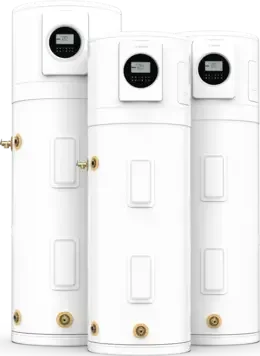
Choose for your household’s hot-water use
Tank volume is a starting point, not the whole sizing decision. Discuss simultaneous showers, baths, laundry, incoming water temperature and recovery after a busy period. Hybrid models may use resistance elements to supplement heat-pump operation; mode settings affect recovery and electricity use.
A standalone water heater provides domestic hot water. It does not replace your home’s space-heating system. Integrated heating and hot-water systems require a separate whole-system design.
Check the location before choosing equipment
Follow the selected model’s room-volume, air-temperature, clearance and any air-ducting requirements. Do not assume every model can operate in a small closed closet. The unit can cool the surrounding space and create fan/compressor sound, so consider adjacent bedrooms and regularly occupied rooms.
Verify voltage, circuit requirements and available electrical capacity. Model-specific lower-power options exist, but a nearby outlet alone does not establish suitability. A gas-to-electric conversion also needs a coordinated plan for the old gas connection and venting.
- Tank height and diameter, delivery route, service and filter access
- Condensate drainage and separate pressure-relief discharge arrangements
- Plumbing connections, leak protection and required seismic restraint
- Manufacturer requirements, permits and any electrical or plumbing changes
Plan the replacement before removal
Resolve the location, model and included trade work first. Confirm how the project will affect hot-water availability and when inspections or other work are expected.
- 01
Review demand
Record the existing tank, household use and proposed location.
- 02
Confirm scope
Specify equipment, electrical/plumbing work, drainage, permits and any relocation.
- 03
Install
Remove old equipment and complete the approved connections and required safety provisions.
- 04
Set up
Check operation and review modes, maintenance access and owner documents.
What affects installation cost?
A replacement in a suitable existing location differs from a relocation with new plumbing and electrical work. Ask for these items to be separated in the estimate so you can compare equivalent scopes.
- Tank capacity, recovery needs and equipment configuration
- Electrical circuit work or capacity changes identified by assessment
- Location changes, air-path modifications and condensate routing
- Plumbing changes, removal, access and permit/inspection work
Prepare your water-heating estimate request
Share the current heater’s fuel type, model label and tank size. Take accessible photos of the heater, surrounding space, nearby drain and closed electrical panel. Mention peak hot-water use, known leaks, difficult access and whether you want to keep the current location. Do not move equipment or open electrical covers for photos.
If your existing water heater needs service
Record the model, fault message and symptoms such as inadequate hot water, leakage or unusual noise. Do not repeatedly reset a tripping breaker. Diagnosis should consider tank condition and repair history before deciding whether repair or replacement is appropriate.
Check incentives before committing
Available programs, eligible models and reservation requirements can change. Check current official resources and confirm contractor participation before counting an incentive in the budget. Financing terms and approval, if available, are separate from rebate eligibility.
Installation in Pleasanton and the Tri-Valley
Explore local project planning for your city. Share your address, current equipment and the rooms you want to improve when requesting an installation estimate.
Your questions, answered.
Can it use the same location as my old water heater?
Possibly. Check the chosen model’s dimensions, air requirements, temperature range, electrical supply, drainage and service clearances. A closet that fits the tank may still need changes to its air path.
Does every heat pump water heater need a new circuit?
No single answer fits every model. Compare the equipment’s voltage and circuit requirements with the existing supply and household electrical load. The assessment establishes whether a new circuit or other electrical work is needed.
Does it need a condensate drain?
Heat-pump operation produces condensate. Plan an appropriate drainage route or approved pumping arrangement for the selected model and location. This is separate from the pressure-relief discharge.
Can I include it in a furnace-to-heat-pump project?
Yes, discuss both goals at the assessment so electrical capacity, locations and work sequencing can be considered together. Each system still needs its own equipment selection and scope.